

The best time to plant garlic in the Syracuse, New York region is late fall, about one to two weeks after the first killing frost, which puts plantings between late October and Thanksgiving. Planting then gives cloves time to grow roots before the ground freezes, without encouraging excessive top growth.
If you are wondering about the proper technique once you are ready, learning how to plant garlic cloves will ensure you get the depth and spacing just right for a bountiful harvest.
Key Takeaway
- Garlic goes into Syracuse-area beds from late October to Thanksgiving, about one to two weeks after the first killing frost and before the ground freezes.
- Each clove sits pointed end up, base two to three inches deep and about six inches from the next, under at least three inches of straw or shredded-leaf mulch.
- Late October planting reduces garlic foliage exposure during part of the allium leafminer fall flight. Cornell sources report that fall-generation adults emerge in early September, with adult activity extending into late October, while larval feeding may continue into December.
When should garlic be planted in Syracuse?
Plant garlic in Syracuse from late October through Thanksgiving, about one to two weeks after the first killing frost. That timing lets the cloves grow roots before the ground freezes, while limiting fall top growth.
A killing frost (the first freeze cold enough to destroy tender garden plants) sets the date more reliably than the calendar does. Garlic grows roots before it sends up a shoot, so the goal is strong roots with as little top growth as possible.
The Cornell Small Farms Program recommends planting between Halloween and Thanksgiving and erring late rather than early.
Syracuse’s temperature record shows why that stretch works. In NOAA’s 1991–2020 normals for Syracuse Hancock International Airport, freezing nights are uncommon in October and routine by December, with November in between.
| Month | Average daily low |
|---|---|
| October | 42.4°F |
| November | 32.7°F |
| December | 23.6°F |
These are monthly averages, not a first-freeze date, so the actual frost each year still sets the schedule. Cornell’s Northeast Regional Climate Center publishes average first-frost dates for 35 major Northeast climate sites.
First-frost dates across the Northeast range from mid-September to late November, and northern areas generally freeze earlier.
How do you adjust the planting date in an early or late fall?
Plant about one to two weeks after the first killing frost and finish before the ground freezes. The decision list below covers an early, late, or borderline year.
- No killing frost yet in late October? Keep waiting. Early planting can produce more top growth before winter. Cornell Small Farms advises avoiding excessive top growth; Penn State notes that a few inches of fall growth usually causes little damage unless conditions become extremely cold.
- Frost arrived early? Count about one to two weeks from the frost, but consider waiting until late October where allium leafminer is active (see the next section).
- Green tips showing before winter? Leave the planting alone. A little fall growth is usually not a problem; Penn State notes that minor shoot emergence before cold weather generally causes little damage.
- Ground still workable near Thanksgiving? Plant garlic. Thanksgiving ends the recommended window, and a frozen bed is the firm limit.
- Ground already frozen? Hold the cloves until spring (see the spring section), because fall planting depends on time to root.
A soil thermometer adds a second check. South Dakota State University Extension puts the ideal planting reading at 50°F at four inches deep. That guidance comes from South Dakota, so treat it as a cross-check on the frost rule, not a replacement.
A mild fall pushes garlic planting later, and an early frost brings it forward, because the date follows the first killing frost rather than the calendar. The fixed limits are a late-October start where allium leafminer is active and a finish before the ground freezes.
Does the allium leafminer change when garlic should go in?
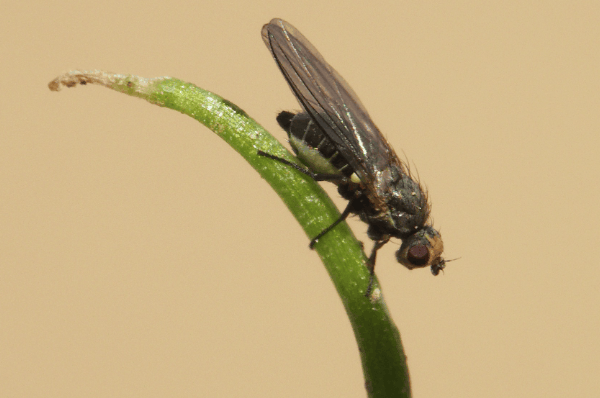
Yes. Allium leafminer (an invasive fly whose larvae tunnel through allium leaves and into bulbs) is one reason to plant garlic in late October rather than earlier.
Cornell Cooperative Extension sources report that fall-generation adults emerge in early September. Adult activity is reported through late October, while larval feeding may continue into December.
Late October planting reduces the time garlic foliage is exposed during the fall flight, but it does not guarantee that planting occurs after all adult activity.
Garlic is less attractive to the fly than other alliums, and fall leeks suffer most because they’re the only allium still in the field during the flight. Timing is therefore a precaution for garlic rather than an emergency. Allium leafminer had spread to New York by 2020, so it can’t be ruled out near Syracuse.
If garlic must go in earlier, cover the bed with insect netting or row cover (lightweight fabric laid over the plants) before or just after adults emerge. Do not use covers over ground where allium leafminer pupae may be present from a prior infested allium crop.
Covers can also affect the bed environment, so monitor plants for disease and manage covers according to the product and local extension guidance.
Signs of damage on more than one or two plants mean covering is probably too late. Damage starts as small punctures on leaf tips, where female flies lay eggs. Larvae feed and tunnel within the plant, and this damage can lead to bacterial or fungal infections and rot.
Other pests can cause similar symptoms, so confirm the cause before treating. Any insecticide must be labeled for the pest and used exactly as its label directs.
What should be ready before the cloves go in?
Three things decide how planted garlic performs: the seed garlic (disease-free garlic sold for planting), the bed, and what grew there recently.
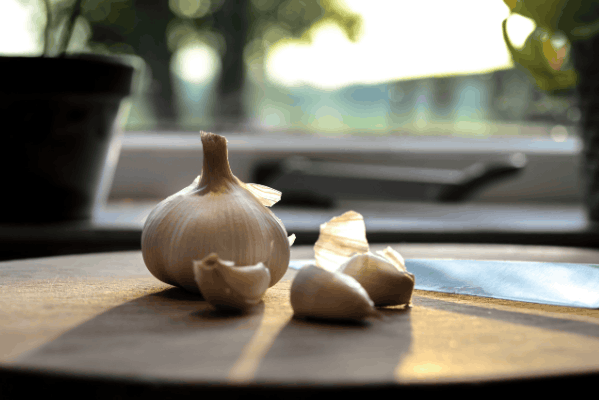
- Seed garlic. Buy firm, healthy bulbs from a local nursery, a farmers’ market grower, or a specialty supplier, not the grocery store. Grocery-store garlic may be a symptomless disease carrier and may have been treated to prevent sprouting. Larger cloves from larger bulbs grow larger bulbs.
- Soil and drainage. Garlic prefers well-drained, moisture-retentive soil that is slightly acidic. Cornell sources place the preferred range around pH 6.2 to 6.8, and a soil test shows where a bed stands. In heavy, wet clay, raised beds two to three feet wide and at least 10 to 12 inches tall help.
- Rotation. Choose a bed that hasn’t held onions or garlic for at least three years.
- Fertility. Work in compost. Fresh manure may carry harmful bacteria and add weeds, according to University of Minnesota Extension, so only well-rotted manure belongs in the bed. Too much nitrogen grows big leaves over small bulbs and can reduce storage life.
How deep and how far apart should garlic cloves go?
Set garlic cloves pointed end up, with the base two to three inches below the soil surface and about six inches apart. Cover the bed with mulch afterward to protect the cloves from freezing and thawing.
- Loosen the bed so cloves can reach full depth without forcing.
- A day or two before planting, break each bulb into cloves, keeping the papery skin on; peeled cloves are more exposed to fungal disease and rot.
- Set each clove pointed end up, base two to three inches deep, about six inches from the next.
- Water the bed if no rain is forecast.
- Cover with at least three inches of straw or shredded leaves; Cornell Small Farms recommends six inches or more. Mulch can go on at planting or a few weeks later.
Depth matters most for winter survival. Freezing and thawing (frost heaving) can push shallow cloves to the surface, and winter wind dries cloves left near it.
Cornell sources recommend planting garlic deeply enough to reduce frost heaving and using heavy mulch after planting. Closer spacing fits more plants but grows smaller cloves.
What happens after planting, from winter to harvest?
Garlic roots in fall, rests under mulch through winter, and is lifted the following July.
| When | What happens | What to do |
|---|---|---|
| Fall, by the first hard freeze | Roots and shoots form; shoots usually stay underground | Leave the bed alone |
| Winter | Mulch steadies soil temperature | Keep the mulch in place |
| Early spring | Shoots push up through the mulch | Pull mulch back after hard freezes end, or leave it to hold moisture and block weeds |
| Late spring | Hardneck garlic sends up a scape (flowering stalk) | Remove the scape as it appears in late June or early July |
| Growing season | Bulbs size up | Keep the bed consistently watered during active growth, then allow the soil to dry about a week before harvest |
| July | Lower leaves begin to yellow while much of the foliage remains green | Dig the bulbs rather than pulling them |
Harvesting too early gives smaller bulbs, and harvesting too late can let cloves separate within the bulb and shorten storage life.
What is the biggest mistake when planting garlic?
Planting too early is the costliest mistake, because it can produce more top growth before winter. Cornell Small Farms advises avoiding excessive top growth; Penn State notes that minor fall growth usually causes little damage unless conditions become extremely cold.
Beyond timing, five other planting errors are relatively easy to prevent:
- Planting too shallow. Frost heaving lifts cloves, so follow the depth rule above.
- Planting upside down. Roots and shoots grow from particular spots on the clove, so an upside-down clove must turn its shoot around. The crop is also harder to harvest, cure, and store.
- Planting too close. Below about six inches, roots compete for nutrients and leaves for light.
- Getting nitrogen wrong. Too little fertility keeps bulbs small, while too much nitrogen grows large leaves above small bulbs and reduces storability.
- Mulching too thinly. Mulch settles and breaks down, so plan on adding several inches in spring.
One county page, from Cornell Cooperative Extension of Schoharie and Otsego Counties, advises planting as early as six to eight weeks before the first expected fall frost. That earlier start overlaps part of the leafminer flight.
It also sits differently from this guide’s later window, so gardeners should weigh local frost conditions, pest pressure, and the supplier’s guidance.
Can garlic be planted in spring?
Yes, garlic can be planted in spring as soon as the ground can be worked, but fall planting is recommended. Fall roots grow through winter, so the plant can grow leaves quickly in early spring.
Roots built in fall and winter support the fast leaf growth that forms large bulbs, so a spring planting starts without that head start and will likely produce smaller bulbs.
Fall planting also gives cloves a longer period of cold exposure before growth resumes.

Garlic planting at a glance
For the Syracuse region, garlic goes in from late October to Thanksgiving, two to three inches deep and about six inches apart, under mulch.
| Item | Guidance |
|---|---|
| Planting window | Late October to Thanksgiving |
| Timing rule | About one to two weeks after the first killing frost |
| Latest date | Before the ground freezes |
| Depth | Base of the clove two to three inches below the surface |
| Spacing in the row | About six inches |
| Mulch | At least three inches of straw or shredded leaves; Cornell Small Farms recommends six inches or more |
| Soil pH | Approximately 6.2 to 6.8 (slightly acidic) |
| Bed rotation | No onions or garlic for at least three years |
| Harvest | July, when lower leaves yellow and much foliage remains green |
Summary
In the Syracuse region, garlic belongs in the ground between late October and Thanksgiving. Plant about one to two weeks after the first killing frost, before the ground freezes, and consider the allium leafminer’s extended fall activity.
Set cloves two to three inches deep and about six inches apart, then mulch the bed. Spring planting remains the fallback if the fall window passes.
FAQs
When should garlic be planted in upstate or western New York?
Planting dates vary across New York. Use local first-frost patterns and local extension guidance for your area. Colder northern locations generally reach suitable planting conditions earlier than milder parts of the state.
Is soaking garlic cloves before planting necessary?
The university sources reviewed for this article do not describe soaking as a required planting step. Research by Cornell-affiliated programs has evaluated various pre-plant seed treatments and Fusarium-management practices.
Results have varied by treatment and trial. Gardeners interested in seed treatments should consult the original study results and current extension guidance before adopting a treatment program.
Is hardneck or softneck garlic better for Syracuse?
Hardneck is the usual choice for cold winters. Cornell CALS describes hardneck types as more winter hardy and the most popular for the region, while softneck types suit long storage and braiding. Hardnecks also send up a scape in spring.
Disclaimer: Frost dates and winter severity vary by site and year, so local conditions and the seed supplier’s guidance come first. Insecticides must be used exactly as labeled; consult a licensed professional / check local codes before applying chemical treatments.