
To plant garlic cloves, separate a seed garlic bulb just before planting and set each clove, pointed end up, about 2 inches deep and 3 to 6 inches apart, in well-drained soil. Plant in fall, several weeks before the ground freezes; recommended timing varies by region.
Water at planting, then apply the mulch depth recommended for your region after the ground freezes.
That answer holds across most of the country, but published planting depths run from 1 to 4 inches and planting windows stretch from September to February.
The sections below show which numbers apply in each region, why sources disagree, and which planting mistakes matter most.
Key Takeaways
- Plant cloves about 2 inches deep, pointed end up, and 3 to 6 inches apart; published depths range from 1 to 4 inches, with colder climates planting deeper.
- Plant in fall, several weeks before the ground freezes; recommended timing varies by region. Planting outside the local window can leave cloves with insufficient root establishment before winter.
- Garlic needs 1 to 2 months of temperatures between 32°F and 50°F to form a bulb, so spring-planted cloves need about 8 weeks of refrigeration first and usually give smaller bulbs.
- Grocery-store garlic is a poor choice for planting: it is usually softneck stock, can carry disease without symptoms, and the University of Maryland Extension advises never planting it.
- Garlic is toxic to dogs, cats, and horses; call a veterinarian or ASPCA Animal Poison Control at (888) 426-4435 if a pet eats any.
How do you plant garlic cloves?
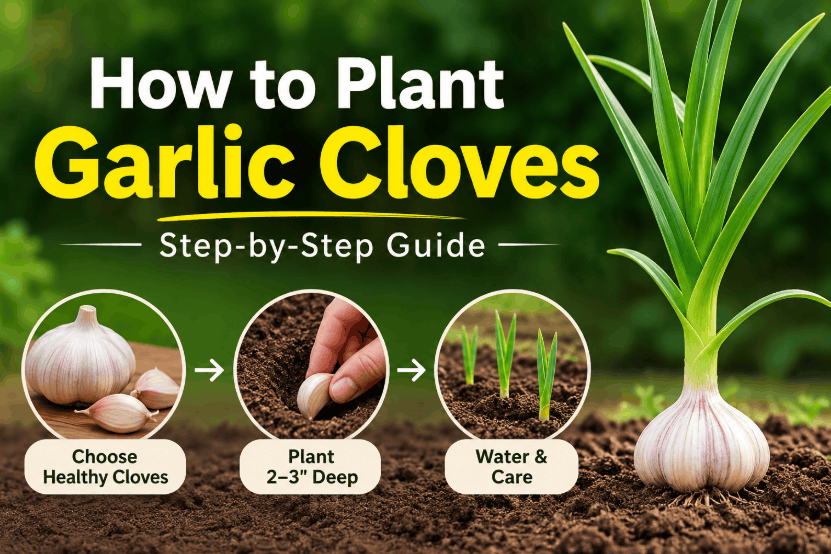
Plant garlic cloves in fall with the pointed end up, about two inches deep and three to six inches apart. Separate the bulb just before planting.
- Choose seed garlic. Buy large, smooth, fresh bulbs free from disease from a garden center or mail-order supplier; the largest cloves grow the largest bulbs.
- Prepare the bed. Till the soil to create a loose bed and mix in well-composted organic matter before planting.
- Separate the cloves. Break the bulb apart just before planting, because early separation lowers yield. Keep the papery skin on each clove, and eat any clove with a torn wrapper instead of planting it.
- Set each clove upright. Place it with the basal plate (the flat root end) down and the pointed tip up, then cover it to the planting depth recommended for your region.
- Space the cloves. Published in-row spacing ranges from 2 to 4 inches in Oregon, 3 to 5 inches in Iowa, and 6 inches in Georgia; row spacing ranges from about 10 to 24 inches. Use the spacing recommended for the region and growing system.
- Water thoroughly. Soak the bed right after planting so the soil settles around the cloves.
- Mulch after the freeze. Once the ground freezes, apply the mulch depth recommended for the region to protect cloves from damage caused by alternate freezing and thawing.
Pointed end up places the basal plate the flat root end down, as Extension guidance directs. As plain arithmetic, a 10-foot row with cloves 6 inches apart takes 20 cloves.

How deep and how far apart should garlic cloves be?
Garlic cloves are planted about 2 inches deep with the pointed end up. Published depths run from about 1 inch in Hawai‘i to 4 inches in Alaska, and colder winters call for deeper planting, while planting too deep can hamper bulb expansion and planting too shallow lets rain wash cloves out.
Planting depth across regions:
| Region | Planting depth |
|---|---|
| Hawai‘i | 1 to 1.5 inches |
| Maryland and Pennsylvania | 1 to 2 inches |
| Oregon | About 2 inches |
| Alaska | 3 to 4 inches |
Spacing varies less than depth. Published in-row spacing ranges from 2 to 4 inches in Oregon, 3 to 5 inches in Iowa, and 6 inches in Georgia. Use the spacing range recommended for the region and growing system.
Where a state publishes its own depth, use it. In colder regions, deeper planting may be appropriate. Some publications measure soil over the clove, and others measure total planting depth, which can make similar advice look different.
When should you plant garlic?
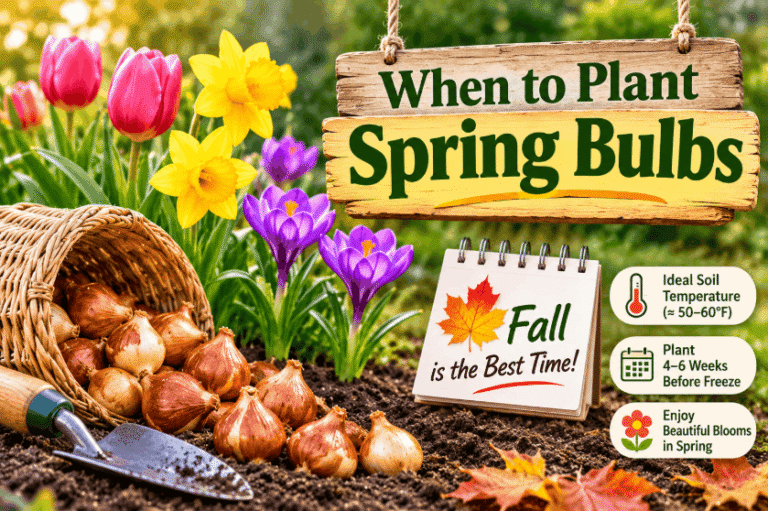
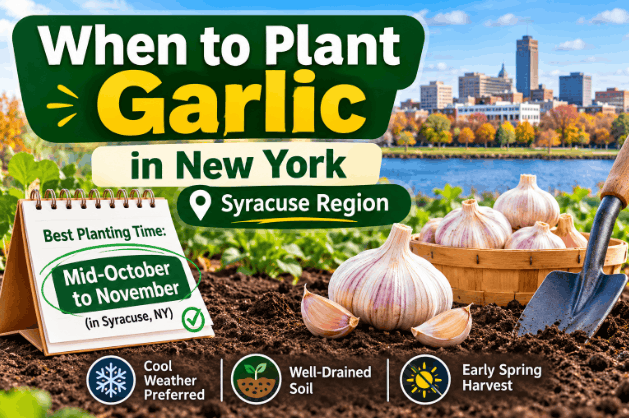
Plant garlic in fall, about four to six weeks before the ground freezes, which usually lands between mid-September and November. Warm-winter regions plant later, from October through February in the warmest areas, and some chill the cloves in a refrigerator first.
The University of Nebraska–Lincoln Extension recommends planting four to six weeks before the ground freezes for best yields; University of Illinois Extension advises planting six to eight weeks before the expected ground freeze.
The aim is enough time for root growth and some early top growth before winter. Planting outside the local window can leave cloves with insufficient root establishment before winter, while planting too late can leave too little time for root growth before the soil freezes.
In Alaska, the same window is also written as one to two weeks after the first killing frost, when air temperature first reaches about 32°F.
How do you find your zone and first freeze date?
- Enter a ZIP code in the USDA Plant Hardiness Zone Map, which reports the zone for that location based on average annual extreme minimum winter temperature, in 10°F zones and 5°F half zones.
- Find the median first fall freeze on the “Historical Date of First Freeze: Median Date” map from NOAA’s National Centers for Environmental Information. A freeze means a widespread air temperature of 32°F or below, and the median date is the one on or before which a freeze is expected in five of ten years.
- Adjust for the site, because elevation, nearby water, and urban heat all shift first-freeze dates, and the NOAA map is a generalization.
- Treat the zone as background only. A zone describes how cold winters get, not when to plant, so two places in one zone can need different dates.
Planting windows published for selected regions
| Region | Planting window |
|---|---|
| Alaska | Mid-September to mid-October |
| Nebraska | Early to mid-October |
| Iowa | October to early November |
| Pennsylvania | Mid to late October |
| Maryland | October 1 to November 1 |
| Oregon | September or early October |
| Georgia | Late September through November |
| Alabama (most of the state) | October to November |
| South Alabama | October to February |
| Hawai‘i | December to February, after refrigerating cloves |
NOAA puts the median first freeze at December or later across most of California and southern Arizona, outside high elevations, so those areas follow the warm-climate pattern below, and a county Extension office can supply a local date.
What changes in warm climates?
Warm-winter regions lack enough natural cold, so chilling becomes part of planting. In Georgia, cloves need six to eight weeks of weather below 40°F after planting to undergo vernalization.
Softneck types are well adapted to the South because they do not bolt easily and tolerate the region’s variable winter temperatures.
In Hawai‘i, seed cloves are refrigerated at 40°F for one to two months, from October through December, before December-to-February planting; without that chilling, plants make leaves but little to no bulb.
Can you plant garlic in the spring?
Yes, garlic can be planted in spring, but the bulbs come out smaller. Cloves need about eight weeks of cold first, so refrigerate them before planting in early spring.
Spring planting works only when the cloves get their cold first. Garlic needs 1 to 2 months of temperatures between 32°F and 50°F before bulbs form, and the University of Illinois Extension puts the refrigeration for early-spring cloves at about eight weeks.
Bulbs still come out smaller, because leaf growth stops once bulbing starts and the plant has had less time to build leaves.
Climate decides how well it works. Iowa State Extension gives late March to mid-April as the spring window; Georgia Extension says spring planting gives unsatisfactory yields because bulbing and maturity do not occur when temperatures are high, and Alaska reports smaller bulbs that often lack clove division.
If fall was missed, plant as soon as the soil can be worked, after refrigerating the cloves.
Which garlic should you plant?
Choose seed garlic matched to the local winter: hardneck types where winters are cold, softneck types where they are mild.
How do you tell hardneck from softneck garlic?
Hardneck garlic produces a flower stalk, or scape. Softneck garlic generally does not produce a flower stalk and is generally better adapted to the warmer South, where it is less likely to bolt. University of Georgia Extension describes softneck types as more adapted to the warmer climate of the South.
Georgia notes that hardneck types may grow there but generally prefer the cold winters and long, cool springs of more northern climates. Softnecks are also the type most often sold in grocery stores, which matters for the next question.
Can you plant grocery-store or sprouted garlic?
Grocery-store garlic is a less reliable source of planting cloves. Grocery-store garlic can carry disease without symptoms, and the University of Maryland Extension advises never planting it.
Clean, disease-free planting stock from a reputable supplier is the standard recommendation. Avoid cloves that are split, moldy, injured, or poorly covered with skin.
Clean seed matters beyond one season, since White rot sclerotia can survive in soil for 20 to 40 years, even without a host plant, and Alaska notes that most seed garlic carries viruses, often without symptoms.

What soil, sun, and fertilizer does garlic need?
Plant garlic in full sun in well-drained, fertile soil with organic matter worked in. Garlic grows best at a soil pH between 6 and 7; liming is recommended below pH 5.8.
Follow a local soil test for fertilizer recommendations. Rotate garlic away from onions and garlic; the University of Maryland Extension recommends a four-year rotation with non-host crops where possible.
Garlic has a medium to high demand for nitrogen. University of Georgia Extension recommends 3 pounds of 10-10-10 fertilizer per 100 square feet before planting, or follow a soil test.
University of Nebraska–Lincoln Extension recommends 3 to 4 pounds of 10-10-10 fertilizer per 100 square feet, or follow a soil test. Always follow the product label.
Can garlic grow in pots?
Garlic can be grown in containers, but container-grown plants need protection from hard freezes. Confirm container depth, spacing, and winter protection with a local Extension office.
How should you care for garlic after planting?
Aftercare comes down to a few well-timed jobs: water at planting, mulch once the ground freezes, feed in spring, keep the bed weeded, and stop feeding and watering as bulbs mature.
| Situation | What should I do |
|---|---|
| Right after planting | Water thoroughly |
| After the ground freezes | Apply the mulch depth recommended for the region to protect cloves from damage caused by alternate freezing and thawing |
| Early spring, once shoots are 4 to 6 inches tall | Topdress with nitrogen |
| Spring and early summer | Keep the soil evenly moist; as a general rule, garlic needs about 1 inch of water weekly with good drainage |
| When hardneck scapes begin to coil | Cut the scapes |
| Once bulbs begin to form | Stop applying nitrogen |
| As tops begin to fall and become dry | Stop irrigating |
Mulch depth varies by region. Georgia Extension recommends 2 to 3 inches of mulch after emergence, kept 2 to 3 inches from the plant stem. Alaska Extension recommends 4 to 10 inches, removed in spring so the soil can warm and ice does not mat.
Garlic roots are shallow and compete poorly, so weed by hand or with very shallow cultivation. Per University of Georgia Extension, apply one-quarter to one-third of the nitrogen before planting and the remainder in spring, after shoots are 4–6 inches tall.
Avoid nitrogen applications after the first week of April to prevent delayed bulbing.
Hardneck plants produce a flower stalk, or scape. Cutting it sends energy back into the plant to grow a bigger bulb, according to Oregon State University Extension. Cut it when it begins to coil.
When and how do you harvest garlic?
Harvest when roughly one-third to one-half of the leaves have yellowed or died back, though the exact cue and timing vary by region and variety.
In Georgia, harvest generally falls between late May and mid-July; in Maryland, fall-planted garlic is usually ready about the second week in July, when 40–60% of leaves have yellowed. In Pennsylvania, harvest is generally early to mid-July.
Hawai‘i guidance commonly uses yellowing of the lower 40–60% of leaves as a maturity cue.
Harvest windows published for fall-planted garlic:
| Region | Harvest window |
|---|---|
| Georgia | Late May to mid-July |
| Maryland | About the second week in July |
| Pennsylvania | Early to mid-July |
Leaf counts are a guide, not a verdict, and the published cues differ: one-third to one-half of leaves dead in Georgia, 40–60% yellow in Maryland, and the lower 40–60% yellow in Hawai‘i. When leaf cues and bulb condition disagree, check a sample bulb before harvesting the crop.
Oregon recommends pulling one plant and cutting it crosswise, then harvesting once the head has divided into plump cloves with a thick, dry, papery skin, even if leaves are still green.
Use a garden fork to loosen the soil before lifting bulbs, which helps avoid stem injury. Harvesting too late can lead to bulb rot, while harvesting too early gives small bulbs that store poorly.
How long does garlic take to grow?
Fall-planted garlic takes most of a year, so the planting date drives the harvest date. Early planting also helps bulb size: leaf growth before bulbing begins sets yield potential, and bulbing stops new leaves from forming.
In Georgia, cloves planted in October may show tops above the soil and be well rooted by November.
Fall-planted garlic grows roots and a little top growth before winter, sits through one to two months of cold, then resumes leaf growth in spring. Bulbs form as days lengthen and temperatures rise; harvest timing varies by region and variety.
What is the biggest mistake in planting garlic?
Timing has a major effect because cloves need time to establish roots before winter.
- Planting too early. In warm-winter regions, planting without adequate chilling can result in leafy growth but little or no bulb formation.
- Planting too late. Roots may not establish fully before the soil freezes, and spring shoot development can be delayed
- Setting cloves upside down. Cloves placed with the root end down give optimum results; incorrect orientation can produce crooked necks.
- Splitting the bulb early. Cloves separated before planting time can yield less.
- Planting doubtful cloves. Avoid cloves that are split, moldy, injured, or poorly covered with skin.
- Planting in the wrong spot. Poorly drained ground can contribute to bulb rot, and planting where onions or other alliums grew recently can increase disease pressure. Follow local rotation guidance.
- Planting small cloves. Small cloves grow small bulbs, so the largest cloves are the ones to plant.
Is garlic toxic to dogs and cats?
Yes. Garlic is toxic to dogs, cats, and horses, and it can damage red blood cells. Call a veterinarian or poison control right away if a pet eats any.
The ASPCA lists the signs as vomiting, breakdown of red blood cells (hemolytic anemia), blood in the urine, weakness, a high heart rate, and panting. The sources describe poisoning, not an allergic reaction. Compounds in garlic and onions can damage red blood cells and cause hemolytic anemia.
If a pet eats garlic, call ASPCA Animal Poison Control at (888) 426-4435 or a local veterinarian as soon as possible; a consultation fee may apply. Loose cloves and harvested bulbs belong out of reach until they are stored.
Conclusion
The most useful rule is timing: plant seed garlic several weeks before the ground freezes, pointed end up, following the depth and spacing guidance for the region. Water after planting and mulch once the ground freezes. Where a state publishes its own window, that local guidance takes precedence.
Planting windows, depths, and fertilizer amounts vary by region, soil, and climate, so local Extension guidance and product labels take precedence. A veterinarian or poison control line is the right contact for any pet that eats garlic.
FAQs
Can you grow garlic indoors?
Indoor garlic can produce leafy greens, but full bulbs are unlikely without cold. Bulb formation needs 1 to 2 months at 32°F to 50°F, and the leaves are needed to build the bulb, so plants grown for greens should be separate from those grown for bulbs.
Should garlic cloves be soaked before planting?
Soaking is not a standard step in the Extension guidance reviewed for this article. Ask a local Extension office before using any seed treatment.
Can you plant just one clove of garlic?
Yes. Each clove is planted separately and grows into one plant that forms a new bulb made of several cloves, so a single clove is enough, and the largest cloves give the largest bulbs.
Does garlic need full sun?
Yes. Garlic grows best in full sun, so a spot that is shaded for most of the day is a poor choice.
What is the best month to plant garlic?
October falls within the published planting windows for several states listed above. Cold regions such as Alaska plant earlier, while warm regions such as South Alabama and Hawai‘i plant from October through February.
Disclaimer: This guide is for informational purposes only; verify regional agricultural practices with local Extension offices and consult a veterinarian immediately for suspected pet toxicity.